

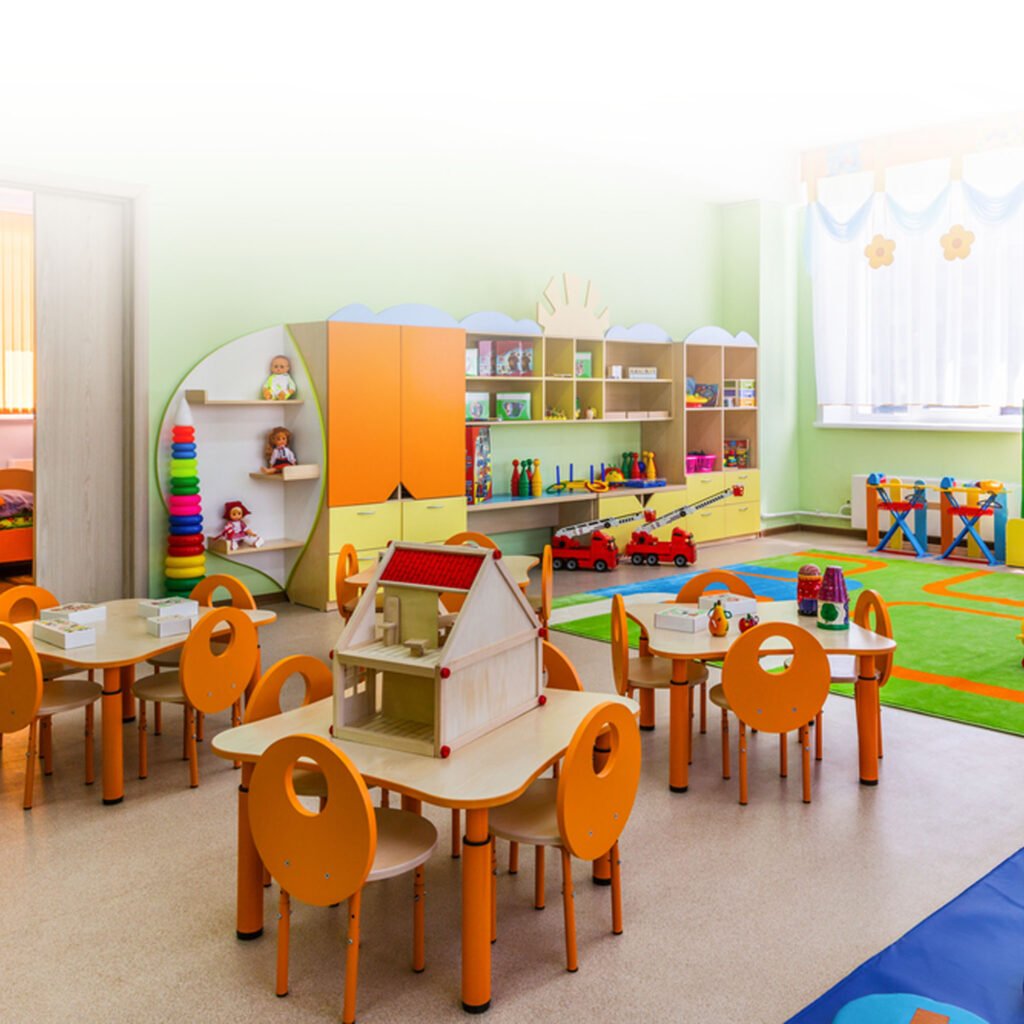
If you are researching preschool franchise opportunities in India, you have probably already noticed that the information available online is either too generic to be useful or too promotional to be trusted. This guide is neither. It covers what a preschool franchise actually involves, what separates a strong franchise model from a weak one, what you genuinely need to invest, and what realistic returns look like — with IKidz’s own model and track record used as the reference point throughout.
If you reach the end of this article and want to explore the IKidz franchise opportunity in more detail, the link is at the bottom. But the goal here is to give you the clarity you need to make a good decision, whatever that decision turns out to be.
Why the Preschool Sector Is Attracting Serious Investors Right Now
India’s preschool market is growing at a rate that most other education segments cannot match. A combination of structural demographic factors — a large and growing young population, rising dual-income households, and a national education policy that has formally placed early childhood education at the foundation of India’s schooling system — has created sustained, non-cyclical demand for quality preschools across urban and semi-urban India.
What makes this particularly relevant for franchise investors is the demand-supply gap outside the top eight metros. Cities like Lucknow, Jaipur, Coimbatore, Visakhapatnam, Indore, and Surat have residential areas where parents are actively looking for organised, quality early education — and where organised preschool brands have not yet established a strong presence. This mismatch between demand and supply is precisely where franchise investors are building profitable, durable businesses right now.
The sector is also recession-resistant in a way that most other franchise categories are not. Parents do not typically pull children out of preschool during economic downturns. Monthly fees continue regardless of market conditions. Once a centre reaches stable enrolment, revenue is consistent, predictable, and grows year on year as new batches enrol.
None of this makes preschool franchising risk-free. But it does make it a more resilient investment than many alternatives at a comparable entry point.
What a Preschool Franchise Actually Gives You — and What It Doesn’t
Before looking at any specific brand, it helps to be clear about what a franchise model does — and does not — provide.
What a franchise gives you:
A franchise gives you a system that has already been built and tested. You receive an established brand name that parents in your area may already recognise or can verify through an online search. You receive a curriculum that has been developed, refined, and used across multiple centres — which means you are not spending your first year figuring out what to teach or how to structure the day. You receive a training programme for yourself and your staff, operational systems for managing admissions and fees, and in most cases a support team you can call when you encounter situations you have not seen before.
This removes months of trial-and-error from the launch phase and significantly reduces the risk of early operational failure, which is the most common reason independent preschools struggle in their first year.
What a franchise does not give you:
A franchise does not remove the need for your genuine involvement, particularly in the first year. Parent trust is built through your presence at the school, your responsiveness to concerns, and the visible quality of daily operations. No brand name substitutes for a centre head who knows every child by name and a franchise partner who genuinely cares about the school’s outcomes, not just its revenue.
The difference between preschool franchise partners who build thriving centres and those who struggle almost always comes down to this: the ones who succeed treat the franchise system as the starting point for building something of their own, not as a hands-off income stream.
The Five Things That Actually Determine Whether a Preschool Franchise Is a Good Investment
Quick fact: IKidz has franchise territories available across 46+ cities in India — including several high-demand residential zones where quality preschool supply is still catching up with enrolment demand.
People researching preschool franchises in India often compare brands primarily on entry investment. This is understandable but significantly incomplete. Entry investment is one number. Here are the five that actually determine how your investment performs over time.
1. The Royalty Structure
This is the factor most franchise brochures gloss over. A royalty percentage — charged monthly on your centre’s revenue, forever — compounds into a very large number over the life of the franchise. At 10% royalty on ₹2 Lakhs of monthly revenue, you pay ₹2.4 Lakhs per year to the franchisor — ₹12 Lakhs over five years — before accounting for any revenue growth. That is money that directly reduces your profitability and delays your break-even.
A zero-royalty model like IKidz changes this calculation entirely. Every rupee your centre earns from the first day stays with you. The franchisor’s return comes from brand growth and the franchise fee — not from a permanent percentage of your revenue.
Over a five-year operating period, the difference between a 10% royalty model and a zero-royalty model at the same revenue level can be ₹15 to ₹25 Lakhs. This is not a marginal difference — it is the equivalent of a second franchise investment that a zero-royalty partner gets to keep.
2. The Agreement Term and Renewal Conditions
A 3-year or 5-year franchise agreement sounds reasonable when you are signing. It feels less reasonable when you are in year 4 with a well-established centre, 70 enrolled students, and the franchisor proposing renegotiated terms as a condition of renewal.
At that point, you have spent four years building a business in a specific location. Your brand recognition in that neighbourhood is real. Your parent community expects continuity. Walking away is not a practical option — which means you negotiate from weakness, not strength.
A lifetime agreement eliminates this dynamic entirely. IKidz’s franchise agreement has no expiry date, no renewal fee, and no renegotiation provision. Partners invest once and operate under the same terms for as long as they run the centre. This provides a level of long-term certainty that fundamentally changes how you can plan and invest in the business.
3. Technology and Curriculum Differentiation
Parents in urban and semi-urban India today are sophisticated consumers of education. They compare options carefully and they ask specific questions. In a residential area where three or four preschools exist within a 2 km radius, the question a parent asks when choosing between them is not “which one has the most brand recognition?” — it is “what is this school actually doing differently for my child?”
Curriculum and technology are the answers that matter. IKidz is the only preschool franchise in India that has built Augmented Reality into daily curriculum delivery as standard — not as a quarterly event or a marketing feature, but as the primary tool through which children interact with letters, numbers, animals, shapes, and early science concepts every day.
When a child comes home from an IKidz centre and shows their parent how an AR flashcard made a dinosaur come to life in 3D, that parent tells other parents. In a preschool context where 60 to 70% of new admissions come from word-of-mouth referrals, technology that children genuinely love and talk about at home is among the most effective admission tools available.
4. Support Quality — Before, During, and After Launch
The quality of franchise support is easy to evaluate during the sales process and very difficult to evaluate from the brochure. Every franchise brand lists “comprehensive support” as a feature. The question to ask is what that support looks like six months after your grand opening, when the launch excitement is over and the daily operational challenges begin.
At IKidz, franchise support covers six specific areas: location selection guidance and territory agreement, interior design blueprint and setup guidance, a seven-day residential teacher training programme, AR technology installation and configuration, a pre-launch local admission campaign, and a dedicated Franchise Success Manager who remains your contact through your first full academic year. This is not a one-time handover — it is an ongoing relationship.
The most useful due diligence you can do before choosing any franchise brand is to speak with three or four existing franchise partners who have been running their centres for at least 18 months and ask them specifically what the support felt like after month six. This question will tell you more than any presentation or brochure.
5. Territory Exclusivity
Exclusive territory rights determine whether the brand you are building in your neighbourhood remains yours. A franchise with territory exclusivity only for the term of a 5-year agreement offers limited protection. A franchise with lifetime territorial exclusivity — which IKidz provides — means no competing IKidz centre will open within your catchment area for as long as you operate.
What a Preschool Franchise in India Typically Costs
Investment in a preschool franchise in India varies considerably depending on the brand, city, and centre size. For a quality franchise at the mid-to-premium market level, the franchise fee and setup package typically range from ₹10 Lakhs to ₹20 Lakhs. IKidz’s all-inclusive package begins at ₹13 Lakhs and covers the complete franchise setup: the AR technology kit, RFID attendance hardware, IKidz Super App configuration, full curriculum materials, teacher training, interior design blueprint, and the pre-launch admission campaign.
Beyond the franchise package, you need to budget for commercial space. Ground floor premises of 1,500 to 2,000 square feet in a residential area are the practical requirement for a functioning preschool. Rental costs vary significantly by city and location — from ₹25 per square foot per month in a smaller Tier-2 city to ₹120 per square foot in a premium metro sector. A three-month rental deposit is a typical requirement.
You should also plan for a working capital buffer of two to three months of operating costs — staff salaries, utilities, consumables — to cover the period before admission fees and monthly fees from your initial enrolment provide consistent revenue. Most franchise investors who encounter cash flow challenges in the first year have underestimated this buffer rather than overestimated the franchise fee.
A realistic total readiness budget — franchise fee, space setup, three months operating float — is ₹18 to ₹24 Lakhs for a standard centre in a Tier-1 or Tier-2 city.
What Returns Look Like — Realistically
A preschool franchise centre with 60 enrolled students and an average monthly fee of ₹3,000 per child generates ₹1.8 Lakhs in monthly gross revenue. In a city like Gurgaon or Bangalore where parents commonly pay ₹4,500 to ₹6,000 per month, the same 60 students generate ₹2.7 to ₹3.6 Lakhs monthly.
At a 45% operating margin — which is achievable in a well-managed centre — monthly profit on ₹1.8 Lakhs revenue is approximately ₹81,000. At ₹2.7 Lakhs monthly revenue in a higher-fee market, monthly profit at the same margin is approximately ₹1.21 Lakhs.
Most IKidz franchise partners reach operational break-even — covering all monthly costs — at 35 to 50 enrolled students. Full investment recovery typically occurs between 12 and 18 months of opening, depending on city, fee level, and enrolment ramp-up speed.
Two factors accelerate this significantly. First, the zero-royalty model means the full margin above operating costs belongs to the franchise partner — none of it flows back to IKidz as a percentage. Second, secondary revenue streams — annual admission fees, daycare fees for full-day programmes, and summer camp fees — typically add 30 to 45% to monthly revenue above base tuition once a centre is established.
The IKidz Franchise Model — What Sets It Apart
IKidz was established in 2012 as India’s first technology-enabled preschool brand, built around the integration of Augmented Reality into early childhood curriculum. Today IKidz operates 170+ centres across 46+ cities, with a franchise network that has grown consistently every year since inception.
The IKidz franchise model is built on four structural commitments that distinguish it within the preschool franchise space:
Zero royalty, permanently. IKidz charges no monthly royalty on franchise revenue. This is not an introductory offer or a limited-period benefit — it is a permanent feature of every IKidz franchise agreement. Franchise partners keep 100% of everything they earn.
Lifetime franchise agreement. There is no fixed term, no renewal date, and no renewal fee. Partners sign once and operate indefinitely under the same terms. This is one of the few lifetime franchise agreements available in the Indian preschool category.
Proprietary AR technology, included. The IKidz AR learning system — including the interactive curriculum app, augmented reality flashcards, classroom tablet setup, and regular content updates — is included in the franchise package at no additional cost. This technology is developed in-house and is not available to any competing franchise brand.
RFID + Super App ecosystem. Every IKidz centre operates with an RFID-based attendance system that sends real-time entry and exit notifications to parents’ phones, live CCTV access through the parent app, integrated fee management, and daily activity updates. Parents expect this level of transparency and communication from quality preschools today — and IKidz delivers it as standard across every centre in the network.
Who Is the Right Candidate for an IKidz Preschool Franchise?
IKidz has franchise partners from a wide range of professional and personal backgrounds. The most consistently successful ones share three characteristics regardless of their prior industry: they are community-minded and genuinely care about what their preschool does for the families it serves, they are operationally involved — at least in the first year — and they have the patience to understand that enrolment compounds over three academic seasons, not three months.
Prior experience in education is not required. IKidz’s training programme covers everything a new franchise partner and their teaching staff need to run the curriculum, manage operations, and use the technology. Many of IKidz’s strongest performing partners have come from corporate roles, banking, and business — with no education background whatsoever.
The investment is better suited to someone who can be genuinely present in the business through the first admission season than to someone planning a fully passive, delegated model from day one. A preschool is a relationship business. The parents who fill your centre are trusting you with the most important person in their lives. That trust is earned through presence, not just brand recognition.
How to Start a Preschool Franchise with IKidz — The Process
The process of becoming an IKidz franchise partner is straightforward and designed to move at your pace.
You begin by filling the online inquiry form on the IKidz franchise page. Our franchise team contacts you within 24 to 48 hours for an initial conversation that covers your city, available territories, the investment model, and any questions you have about the process.
If you decide to proceed, the next step is a discovery session — a detailed briefing on the full IKidz franchise model, financials, support systems, and territory options, either virtually or at our nearest regional office. Many franchise partners find this conversation resolves questions that no amount of online research had been able to answer.
Territory selection and finalisation comes next. IKidz’s team assists with location evaluation, catchment analysis, and territory agreement before the franchise agreement is signed.
From agreement signing to grand opening, most IKidz centres complete setup and launch within 40 to 60 days. The interior work, technology installation, teacher training, and pre-launch admission campaign run in parallel during this period, with IKidz’s support team managing each component.
The first admission season — typically February to April for a June academic year opening — is when your enrolment base is built. IKidz’s admission campaign support, which includes local area marketing materials, digital advertising guidance, and residential society outreach templates, is particularly intensive during this window.
Frequently Asked Questions About Preschool Franchise in India
What is the minimum investment required to start a preschool franchise in India?
The minimum investment for a quality preschool franchise in India ranges from ₹10 Lakhs to ₹20 Lakhs depending on the brand and city. IKidz’s all-inclusive franchise package begins at ₹13 Lakhs and covers technology, curriculum, training, and launch support. Additional costs include commercial space rental and a working capital buffer for initial operating months.
Is a teaching qualification required to open a preschool franchise?
No formal teaching qualification is required. IKidz provides a comprehensive seven-day training programme for franchise partners and teaching staff covering curriculum delivery, AR technology, child development principles, classroom management, and operational systems. Many IKidz partners have backgrounds in business, finance, and corporate careers with no prior experience in education.
How long does it take to recover the investment in a preschool franchise?
Investment recovery timelines vary based on city, fee levels, and enrolment growth. For IKidz franchise partners operating in standard residential markets, full investment recovery typically occurs within 12 to 18 months of opening. Centres in higher-fee markets like Gurgaon, South Mumbai, or Bangalore with strong first-season enrolment have recovered their investment in under 12 months.
What is the minimum space required to open an IKidz preschool?
IKidz requires a minimum of 1,500 square feet on the ground floor. The ideal space is between 1,500 and 2,500 square feet and should accommodate two to three classrooms, a reception area, an AR learning zone, separate washrooms for children, and a small outdoor or indoor play space. IKidz provides a complete interior design blueprint for setting up the space to brand standards.
Does IKidz provide territory exclusivity?
Yes. Every IKidz franchise partner receives exclusive territorial rights for the lifetime of their franchise agreement. No competing IKidz centre will be established within your defined catchment area, protecting the investment you make in building your local parent community and brand recognition.
What ongoing support does IKidz provide after the centre opens?
Support continues beyond the launch phase. Each franchise partner has access to a Franchise Success Manager, curriculum update support as IKidz’s content evolves, technical support for the AR and RFID systems, and operational guidance on hiring, admissions, and parent communication. The IKidz network of 170+ centres also means there is a large peer community of franchise partners who share experience and best practices.
What makes IKidz different from other preschool franchises in India?
Three things distinguish IKidz structurally from most alternatives: zero royalty on all revenue, a lifetime franchise agreement, and proprietary AR technology integrated into daily curriculum. These are not marketing claims — they are the specific contractual and operational commitments that make the IKidz business model work differently for franchise partners over the long term.
A Note on Choosing the Right Preschool Franchise
The preschool franchise market in India has grown substantially over the past decade, and there are now many credible options for investors to evaluate. The decision you make should be based on the full picture — not just the franchise fee on the brochure, but the royalty structure, the agreement term, the quality of support, the territorial protections, and most importantly, whether the brand’s curriculum and technology give you a genuine advantage with parents in your specific city and neighbourhood.
Take the time to visit existing centres of any brand you are seriously considering. Speak with franchise partners privately. Ask what their first six months looked like and what they know now that they wished they had known before signing. This kind of due diligence consistently separates investors who build strong, sustainable preschool businesses from those who discover the gaps too late.
If after doing that research you feel that IKidz’s model — the technology, the zero-royalty structure, the lifetime agreement, and the quality of operational support — is the right fit for your investment and your goals, we would like to speak with you.
Ready to Explore the IKidz Franchise Opportunity?
If you are actively evaluating preschool franchise opportunities in India and want a detailed conversation about territories available in your city, the investment model, and what the IKidz franchise experience actually looks like for existing partners — the next step is a conversation with our franchise team.
Enquire About the IKidz Franchise →
You can also download the IKidz franchise brochure for a detailed breakdown of the investment, support systems, and franchise model before getting in touch.
Related Reading on the IKidz Blog
- How to Start a Preschool Franchise in India — A Step-by-Step Guide
- Preschool Franchise Cost in India — What ₹13 Lakhs Gets You
- Zero Royalty Franchise Model — Why It Changes Everything for Preschool Investors
- IKidz Preschool Franchise in Gurgaon — Available Territories and How to Apply
- 5 Key Benefits of Owning a Preschool Franchise in India